

EN
English
简体中文
繁體中文
EN
This solution adopts a three-tier architecture with a front-end unit, data processing unit, and remote unit. It extends the base station signal through Ethernet/optical-electrical composite cables, supporting multi-band 2G/3G/4G/5G and NB-IoT IoT transmission, without requiring new transmission resources, avoiding construction interference. The solution is lightweight, plug-and-play, and adapts to high coordination-difficulty scenarios, such as an underground parking lot in a residential area in Shenzhen.
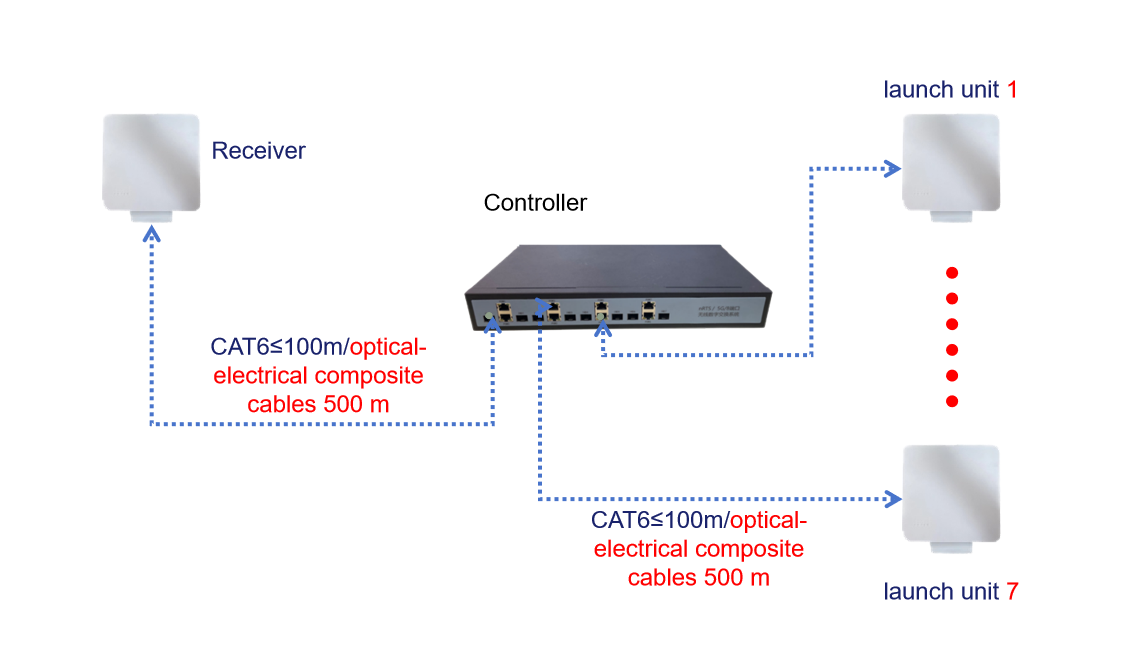
Shenzhen Residential Underground Parking Signal Coverage Innovative Case: The underground parking lot has a total area of 18,000㎡, and the basement on the first floor lacks 4G/5G signals. However, there are no available transmission resources within the residential area, and new transmission would require disruptive construction that residents and property management oppose. After multiple failed coordination attempts, we used the standard 4G indoor coverage system with a '1 front-end unit + 1 data processing unit + 7 remote units' cascading architecture, achieving wireless transmission via CAT6 cables (≤100 meters), avoiding construction interference. The solution utilizes an exterior wall reception unit to directly link the signal from the iron tower, avoiding interference with the existing network. The construction is plug-and-play, and the basement's RSRP reaches ≥-80dBm, ensuring normal voice and data services, and supporting NB-IoT IoT transmission, leaving room for future expansion in the smart community renovation.
